In short
Ekvira Devi Temple sits atop the Karla hill near Lonavala, reached by a stairway of several hundred steps that you climb on foot. Darshan is free; the temple is reported to open roughly 5 AM–12 PM and 4–9 PM with a midday break, but verify before you travel. Since July 2025 the Trust asks visitors to wear modest, traditional clothing. Carry water and go early. The temple is a living shrine and is separate from the adjoining Karla Caves, an ASI-ticketed ancient monument.

A first visit to Ekvira Aai is part pilgrimage and part hill walk. A little planning — comfortable shoes, an early start, and a sense of what lies at the top of the steps — turns a tiring day into a calm one. Here is what we would tell a friend going for the first time.
What to expect when you arrive
The shrine stands on a hill at Karla, in Taluka Maval of Pune District, just off the Mumbai–Pune corridor near Lonavala. From the road you reach a base area where you park and gather yourself; from there a long flight of stone steps leads up to the temple. The atmosphere is devotional rather than touristy — families climbing together, flower and coconut stalls along the way, and the steady rhythm of pilgrims going up and coming down.
Because the temple is run by a community trust and not a ticketed attraction, much of the experience is informal. There are no turnstiles or fixed queues outside the big festival days, and darshan itself is free. Plan to spend two to three hours on the visit as a whole, more if you also want to see the caves.
The climb — on foot, several hundred steps
The main thing first-timers underestimate is the climb. The stairway is commonly described as roughly 350 to 500 stone steps, depending on where the count begins — the parking area, the hill base, or somewhere in between. Most reasonably fit visitors manage it in about twenty to forty minutes at a steady pace, pausing on the landings.
There is no confirmed doli (palanquin) for hire and no operating ropeway at the time of writing, so everyone goes up on foot. (A ropeway has been discussed as a project but is not in service.) Take the steps slowly, use the handrails where they exist, and rest whenever you need to — there is no prize for rushing. For a fuller breakdown of the route and who may find it difficult, see our guide to the climb and accessibility.
Step counts are reported inconsistently and there is no confirmed assisted-climb service; treat both as informal until confirmed on site.
Reported timings
Public sources commonly cite temple hours of roughly 5:00 AM–12:00 PM and 4:00–9:00 PM, with a break through the middle of the day. There is a morning aarti around dawn and an evening aarti around dusk, but the exact times are reported differently from source to source, so we do not publish a single fixed minute.
These hours are gathered from travel guides rather than an official notice, and they shift on festival days, so please confirm before you set out. Our timings and aarti page keeps the latest reported hours together with the caveats.
Timings are indicative and time-sensitive — verify with the temple before travelling, especially on festival days.
Dress code (in force since July 2025)
Since 7 July 2025 the temple has asked devotees to dress modestly in traditional or otherwise decent attire. Reporting at the time noted that shorts, mini skirts, ripped jeans and similar revealing or Western clothing may be turned away. The change was announced by the Trust and covered by the press, so it is well documented — though, like any temple policy, it can be revised.
For a first visit, traditional Indian wear or simply modest clothing that covers the shoulders and knees is the safe choice. Our visitor guidelines page sets out the dress code and other etiquette in more detail.
What to carry
- Water — the climb is the thirsty part; carry your own bottle.
- Comfortable, grippy footwear for the steps, which you will remove before entering the shrine.
- A small offering if you wish — flowers, coconut or prasad can usually be bought near the base.
- Cash in small denominations for stalls and offerings; do not assume digital payment everywhere.
- Sun protection (cap, light scarf) for the open stretches of the climb.
- A light rain layer in the monsoon months, when the steps can be slippery.
Etiquette & darshan
Footwear is removed before entering the sanctum, so wear shoes that come off easily. Keep phones silent and ask before photographing inside the shrine, as photography may be restricted in the inner area. Move with the flow of the queue, especially when it is busy, and let elderly devotees and families with small children go ahead where you can. Treat the stalls and the climb as part of the experience rather than something to hurry through.
Best time to visit
For a calmer first visit, aim for a weekday morning soon after opening, when the air is cool and the steps are quiet. Weekends, public holidays and the big festival days — particularly the Chaitra Yatra around March–April and Navratri in spring and autumn — draw large crowds and heavy traffic, which is wonderful if you want the festive energy but harder if you want a peaceful darshan.
Avoid the harsh midday heat of summer, and be cautious in the monsoon, when wet steps demand extra care and local authorities sometimes issue seasonal advisories for the Lonavala–Maval area. Our best time and weather guide goes season by season.
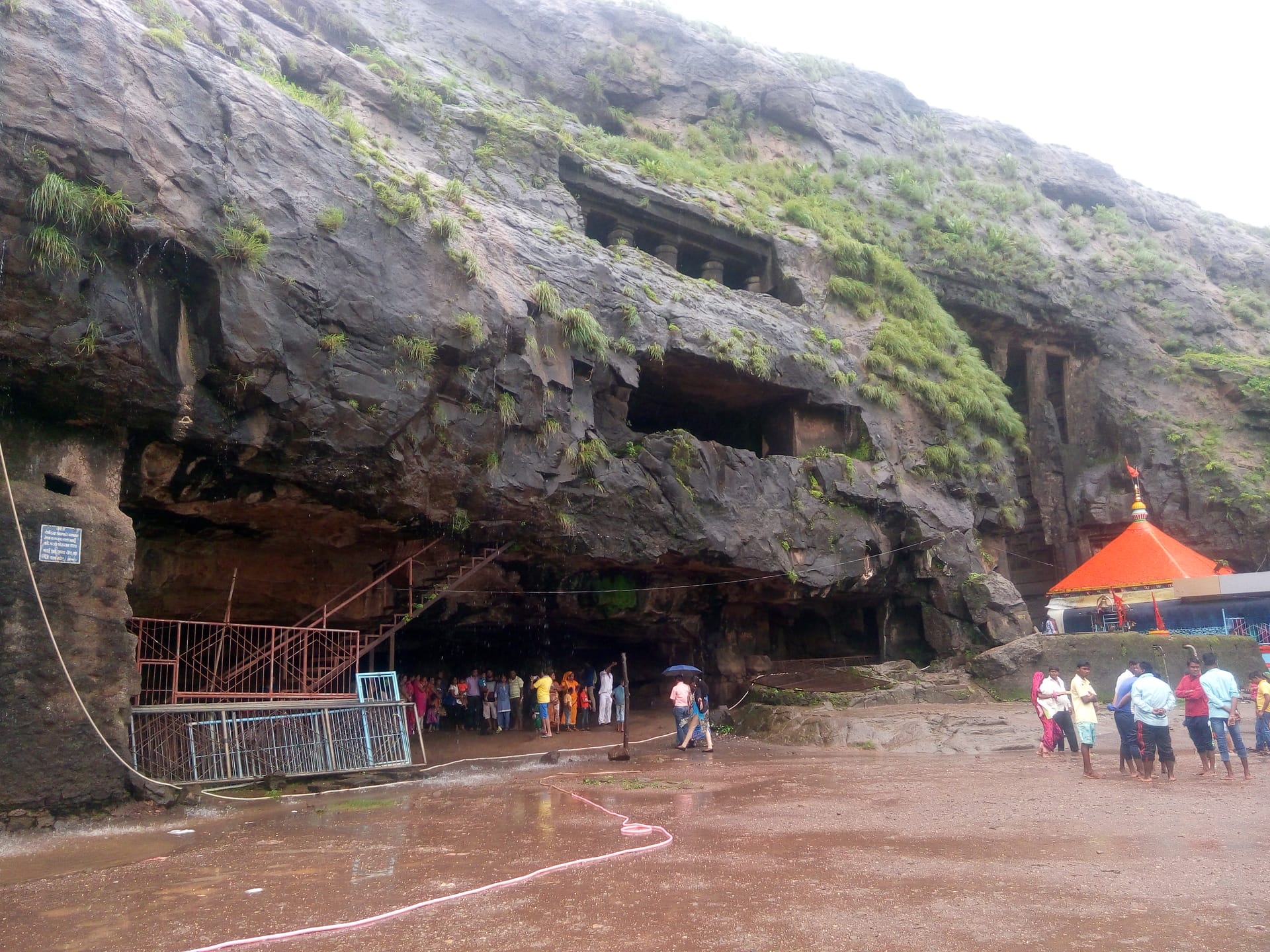
Temple vs caves — two different visits
On the same hill you will find the Karla Caves, an ancient Buddhist rock-cut complex protected by the Archaeological Survey of India (ASI). These are a separate attraction with their own opening hours (reported around 9:00 AM–5:30 PM) and a separate entry ticket. The living Hindu temple and the heritage caves share a location but not a history or a management, so plan them as two distinct parts of your day — and remember the caves typically close earlier than the temple.
Planning your first darshan?
Read the reported timings, the route and the dress code together before you set out — and confirm the time-sensitive details with the temple.
Plan your visitSources & notes
- Dress code (in force from 7 July 2025): reported by ThePrint, quoting the Trust.
- Karla Caves as a centrally protected monument (timings, ticketing): Archaeological Survey of India — confirm the current cave charge on site.
- Tourism context for the Lonavala–Karla area: Department of Tourism, Maharashtra.
- Background on the deity and site: Wikipedia — Ekvira (reference only).
- Timings and step counts are compiled from public travel sources and are time-sensitive — please verify before travelling.