In short
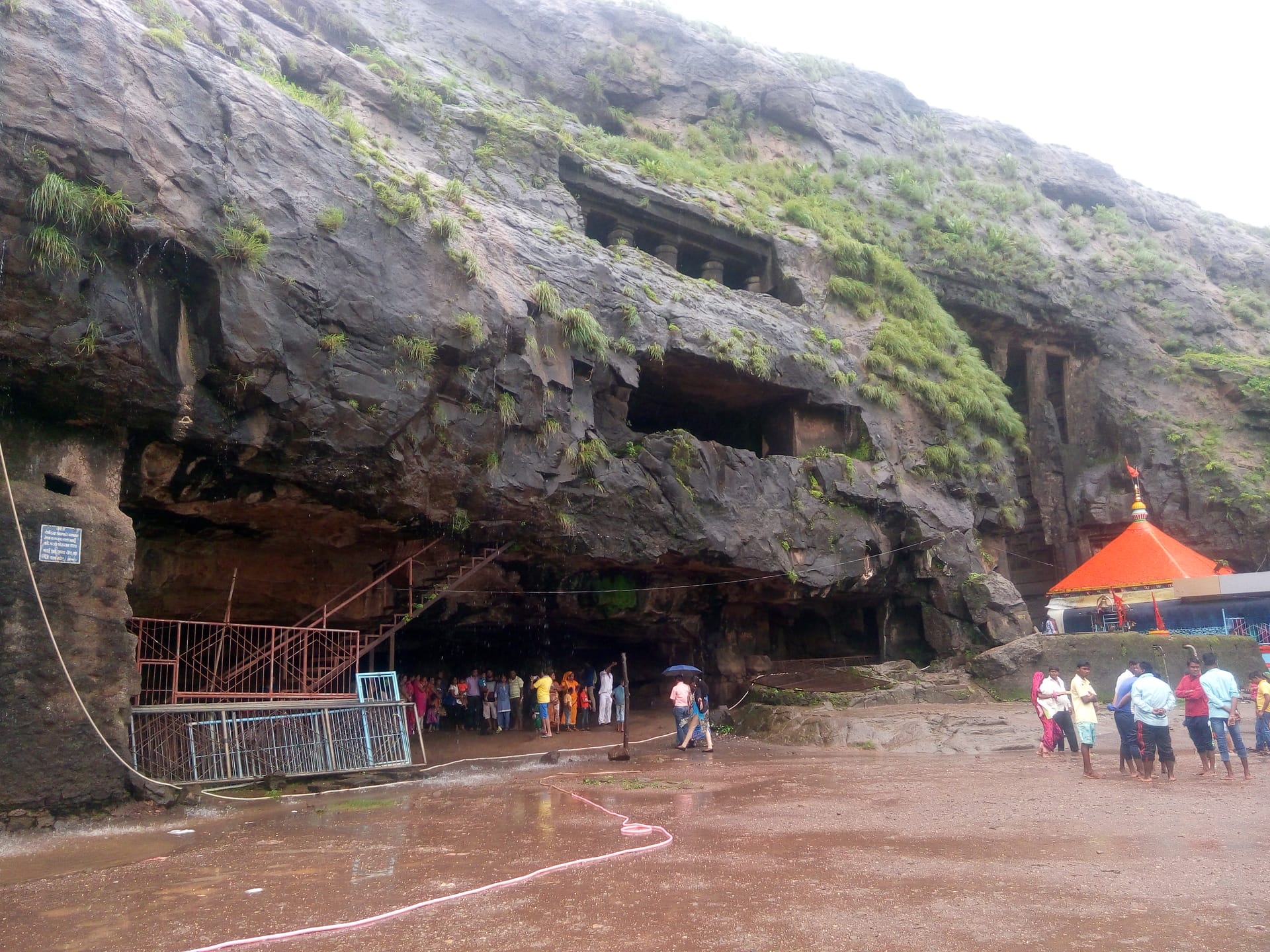
The Ekvira Devi Temple — also called the Ekvira Aai Temple — is a living Hindu shrine at Karla, near Lonavala in Maharashtra. It honours Ekvira Aai, regarded as a form of the goddess Renuka and the Kuladevi (family deity) of the Koli, Agri and CKP communities. The shrine stands on the same hill as the Karla Caves, but the two are separate: the temple is a place of worship, while the caves are an ancient ASI-protected monument.

A darshan visit to Ekvira Aai. Third-party video via YouTube, shown for a visual impression only — please verify practical details on our pages.
What the temple is
The Ekvira Devi Temple is an active centre of worship reached after a climb of several hundred stone steps on the hill at Karla. Devotees come for darshan, to make offerings, and to take part in seasonal festivals. Unlike a museum or a ruin, it is a living shrine: daily worship continues, and the calendar of observances follows the Hindu lunar year.
Darshan at the temple is free. The hill it sits on also holds the Karla Caves, a distinct heritage site — the difference between the two is explained in the clarification below.
Names: canonical and alternate
The shrine is most commonly written as the Ekvira Devi Temple. Devotees affectionately address the goddess as Ekvira Aai (“Aai” meaning “mother” in Marathi), and the name Ekvira Aai Temple is used just as widely. You may also encounter spellings such as Ekveera or Ekveera, and the place name appears variously as Karla, Karli or Karle. A fuller account of the goddess and her names is given on the Ekvira Aai page.
Spiritual importance
For her devotees, Ekvira Aai is a guardian and a family deity rather than a distant figure. She is venerated as a form of Renuka, and households that hold her as their Kuladevi return to Karla across generations to fulfil vows, perform family rites, and seek her blessing at life’s milestones. The climb to the shrine is itself part of the devotional experience for many pilgrims.
Origin stories that link the site to the Pandavas of the Mahabharata, or to Renuka and Parashurama, belong to devotional tradition and oral legend — they are cherished by the community but are not the same as documented history. The recorded heritage of the hill is set out separately on the History & Legends and Karla Caves pages.
Community connection
The temple’s identity is closely bound to the communities for whom Ekvira Aai is the Kuladevi — especially the Koli (a traditional fishing community), the Agri community, and the Chandraseniya Kayastha Prabhu (CKP), with some Daivadnya families as well. This connection is most visible during the Chaitra festival, when groups carry a ceremonial palkhi (palanquin) in procession. The cultural relationship is explored respectfully on the Agri–Koli Heritage page.
The Ekvira Devi Temple
A working Hindu temple where daily worship and festivals continue today. Darshan is free; the shrine is reached on foot up the hill. Managed in the tradition of the temple trust, not by the heritage authority.
The Karla Caves
An ancient rock-cut Buddhist complex on the same hill, protected by the Archaeological Survey of India (ASI). It has its own timings and a separate ticket, and is conserved as a historic site rather than used for temple worship.
Temple vs Karla Caves — they are not the same
The Ekvira Devi Temple and the Karla Caves share one hill but are distinct in history, purpose and management. The temple is a living place of Hindu worship with free darshan. The caves are an ancient Buddhist rock-cut monument under the ASI, with separate opening hours and a separate ticket.
Please keep the two apart when planning: cave timings, fees and conservation rules do not govern temple darshan, and vice versa. See Karla Caves and cave visitor information for the heritage side.
Explore the temple section
Use these guides to learn more about the goddess, her communities, the legends, and how worship is offered at the shrine.
Ekvira Aai
The goddess, her names, and her significance as a form of Renuka and Kuladevi of several communities.
History & Legends
The recorded heritage of the hill alongside the devotional traditions, kept clearly apart.
Agri–Koli Heritage
How the Koli, Agri and CKP communities relate to Ekvira Aai, and the Chaitra palkhi procession.
Rituals & Offerings
The general rhythm of daily worship, common offerings, and respectful etiquette at the shrine.
Planning a trip? The Visit overview gathers timings, routes, the climb and guidelines in one place.