In short
The Chaitra Yatra is Ekvira Devi Temple's principal annual fair, held around Chaitra Shuddha Saptami — roughly 24–25 March 2026 (approximate; confirm with the temple). Its heart is the palkhi, the goddess's palanquin procession, carried with strong participation from the Agri and Koli communities for whom Ekvira Aai is the family deity. Expect very large crowds, heavy traffic around Karla and Lonavala, and a demanding climb. These are lunar dates and shift every year.
The Chaitra palkhi procession. Third-party video via YouTube, shown for a visual impression only — please verify practical details on our pages.
If you visit Ekvira Devi Temple only once a year, this is the day the hill comes fully alive. The Chaitra Yatra draws families who have venerated Ekvira Aai for generations, and the palanquin procession turns the long stone stairway into a river of pilgrims, drums and flowers.
What the Chaitra Yatra means
Ekvira Aai — regarded as a form of the goddess Renuka — is the Kuladevi, or family deity, of the Koli, Agri and CKP communities. The Chaitra Yatra is the year's main occasion to honour her collectively. For coastal Koli families in particular, who revere her as a protector of those who go to sea, the yatra is both a homecoming and a vow fulfilled. Households travel from along the Konkan and from the cities to climb the hill together, offer worship, and join the procession.
Stories of the goddess's origins — her connection to the Pandavas during their exile, and to the Renuka tradition — are devotional lore carried down the generations rather than recorded history, and the community treats them as living faith. You can read more about that distinction on the history and legends page.
The lunar basis: Chaitra Shuddha Saptami
The yatra is fixed not to a calendar date but to a lunar one: the seventh day (Saptami) of the bright fortnight (Shuddha / Shukla paksha) of Chaitra, the first month of the traditional Hindu year. Because the lunar-solar panchang does not line up with the Gregorian calendar, the Western date drifts from year to year — which is exactly why we never carry an old date forward. Palkhi events have been reported around the days bracketing the Saptami, so the celebration can span more than a single day.
2026 dates (approximate): Chaitra Shuddha Saptami falls around 24 March 2026, with palkhi events reported around 25 March 2026. Because the festival is lunar, these Gregorian dates change every year — treat them as approximate and confirm the exact dates and programme with the temple before you travel. Source: Pudhari (Marathi) and panchang sources; last reviewed 25 June 2026.
The palkhi and the Agri–Koli tradition
The palkhi — the ceremonial palanquin — is the procession at the centre of the yatra. It is carried by devotees amid music, chanting and the energy of the gathered communities, and it is in this procession alone that you will see a palanquin at the temple; there is no palanquin or doli offered as a service for ordinary visitors at other times. The Agri and Koli communities lead much of the observance, and the day is as much a celebration of their shared heritage as it is a temple festival. To understand the people and culture behind the procession, see the Agri–Koli heritage page.
The honour of leading or carrying a ceremonial palanquin can rotate among community groups from year to year. In 2026, the Kalyan Koliwada group was reported to lead a ceremonial palanquin, described as a rotational honour. Arrangements like this are organised by the communities and the Trust and can change, so we report it as a dated detail rather than a fixed tradition.
Crowds, transport and safety
The Chaitra Yatra is the temple at its most crowded. Plan realistically:
- Arrive early. The stairway and the approach near the hill base fill from early morning; the cooler hours are also kinder for the climb of several hundred steps.
- Expect traffic. Roads near Karla and along the Mumbai–Pune corridor around Lonavala (about 11 km away) can be congested, and parking near the hill base fills early. Allow far more time than a normal visit.
- Climb on foot. There is no confirmed doli-for-hire or ropeway; the route is a long stairway and is not wheelchair accessible. Keep children and elderly companions close on the steps.
- Come prepared. Carry water, wear sensible footwear, and dress modestly — the temple has asked for traditional or decent attire since July 2025. Watch your footing in dense crowds.
Before you go: confirm the exact yatra dates and any special programme with the temple, and check the current season's travel and safety advisories for the Lonavala–Maval area. See How to Reach for routes and the last mile.
What to expect on the day
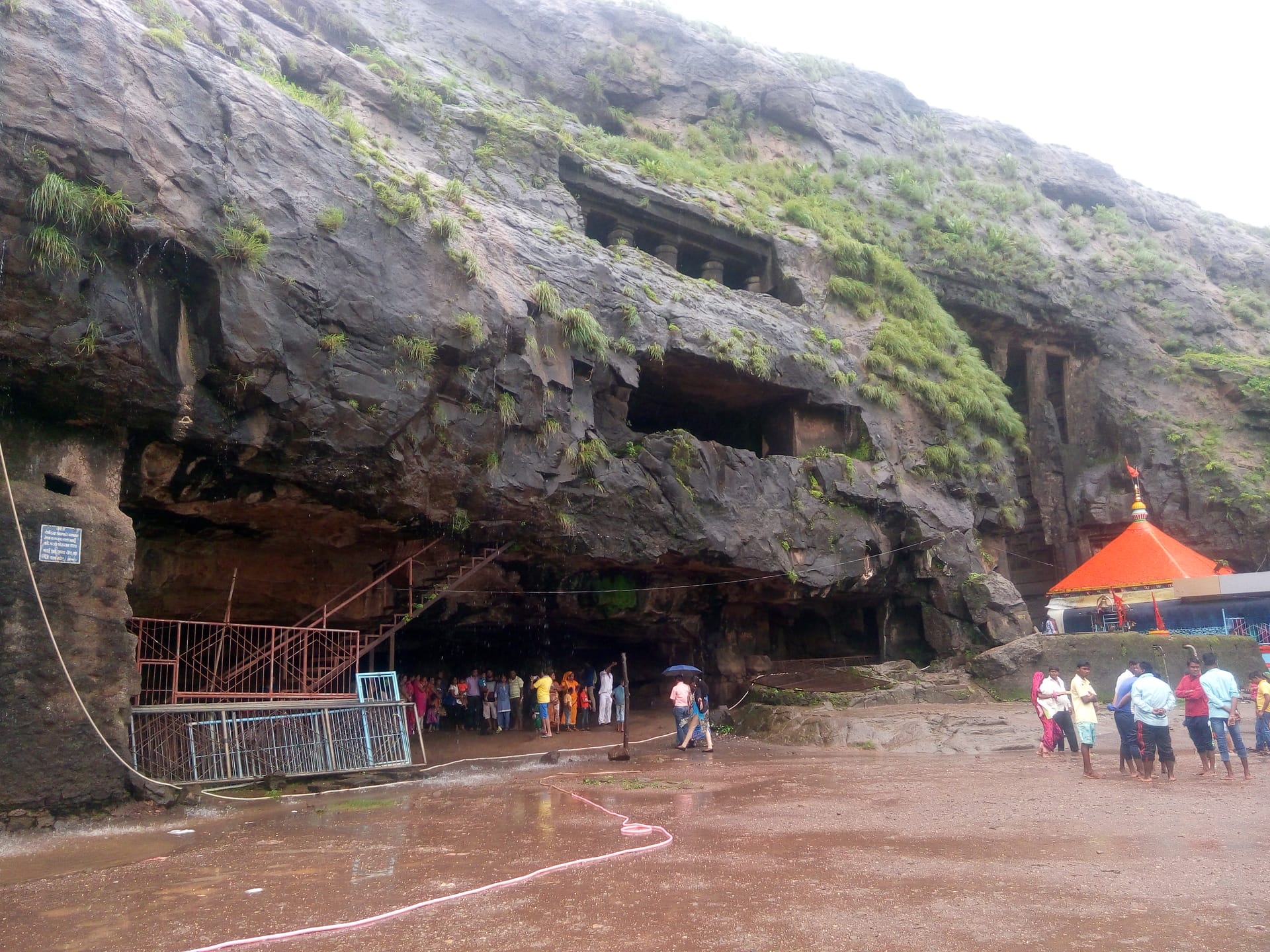
A festival-day visit feels nothing like a quiet weekday climb. The atmosphere is devotional and energetic: the sound of drums and chanting, the scent of flowers and incense, vendors and stalls near the base, and a steady stream of pilgrims on the steps. Darshan queues are long, so patience helps. The same hill holds the ancient, ASI-protected Karla Caves, which keep their own separate timings and ticketing and can feel busier too on yatra days. Treat the day as a pilgrimage rather than a sightseeing trip, give yourself plenty of time, and you will see Ekvira Aai's festival at its most vivid.
For a sense of the place outside festival season, browse the photo gallery, and for the full year's dates see the festival calendar.