In short
The temple's biggest occasion is the Chaitra Yatra and palkhi around Chaitra Shuddha Saptami (roughly late March), followed by Navratri in both spring and autumn. Smaller observances mark Chaitra Purnima, Makar Sankranti and Diwali. Every date here follows the Hindu lunar calendar, so it shifts year to year — treat the Gregorian dates as approximate and confirm with the temple. See the full festival calendar before you travel.
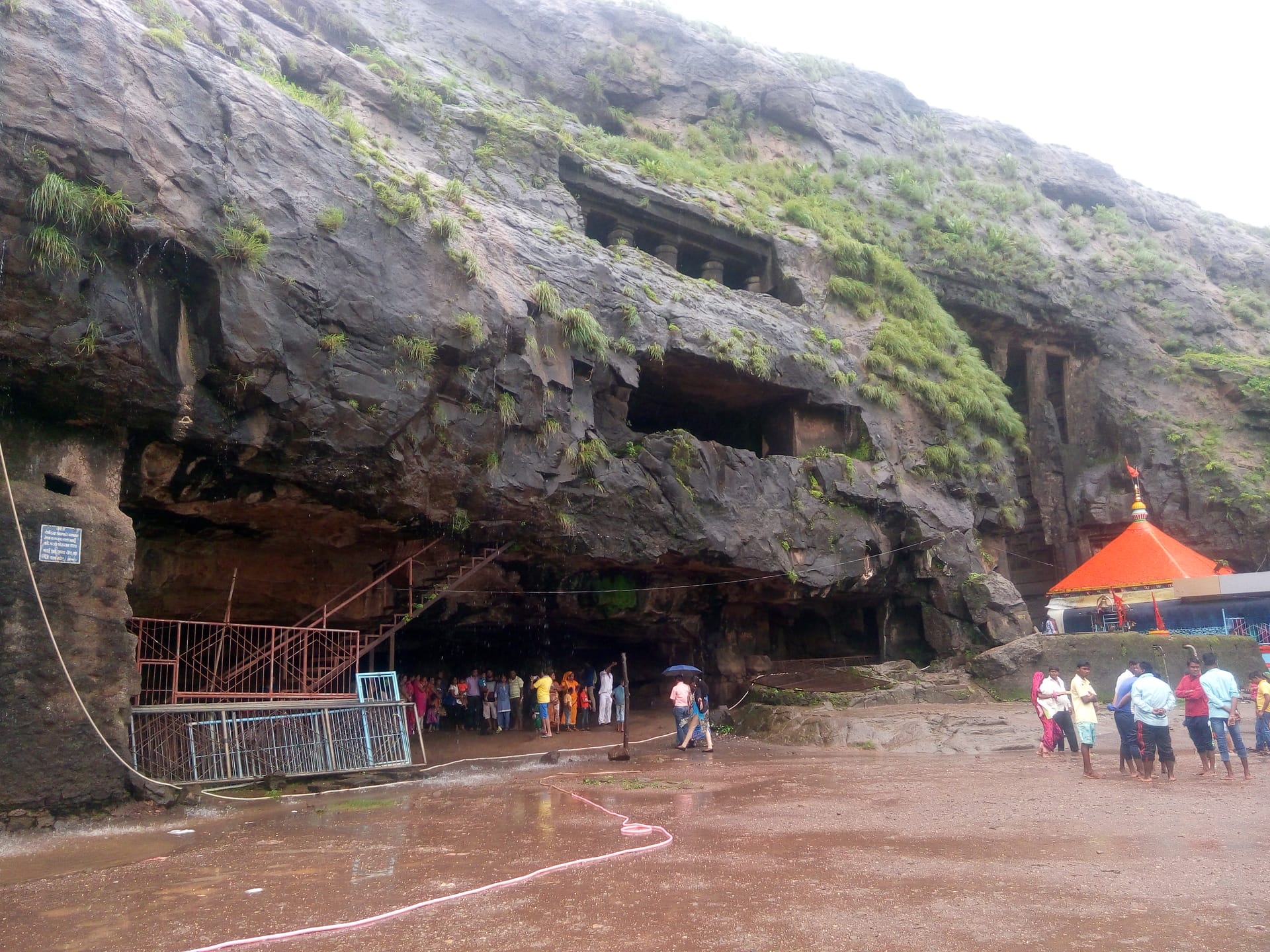
Ekvira Aai is the Kuladevi — the family deity — of the Koli, Agri and CKP communities, and her festivals carry that community devotion to the hilltop at Karla. On the busiest days the climb of several hundred steps fills with pilgrims, drums and offerings, and the quiet shrine becomes one of the liveliest places in Maval.
The shape of the temple year
Most of the year, a visit to Ekvira Devi Temple is a calm climb and an unhurried darshan. The calendar lifts twice into something far bigger. The first peak is the Chaitra Yatra, the temple's principal annual fair, when the goddess's palanquin is carried in procession and Agri and Koli families arrive in large numbers from along the Konkan coast and the city. The second is Navratri, the nine nights honouring the Goddess, observed at Karla in both its spring (Chaitra) and autumn (Sharad) forms.
Around these sit gentler observances — the full-moon Chaitra Purnima a week or so after the yatra, the winter harvest day of Makar Sankranti, and the lamps of Diwali. The temple is also a living shrine where ordinary days bring their own small rituals; this page covers the named festivals rather than the daily routine, which we deliberately do not try to fix to a timetable.
Why the dates move every year
Hindu festivals are set by a lunar-solar calendar (the panchang), not the Gregorian one. A festival tied to, say, the seventh day of the bright half of Chaitra falls on a different Western date each year. That is why we never carry old dates forward: a date that was right one year will be wrong the next. Wherever we give a 2026 Gregorian date below it is approximate, and we re-verify it annually.
Festival dates are lunar. Every Gregorian date on this site is approximate and must be confirmed with the temple before you plan around it. We last reviewed these against panchang sources on 25 June 2026 and re-check them each year. Source: panchang / dated news; see the Fact Verification Register.
Major observances
Chaitra Yatra & Palkhi
The temple's main annual fair, around Chaitra Shuddha Saptami (~24–25 Mar 2026, approximate). The palanquin procession and strong Agri–Koli participation define it.
Read the guide →Chaitra Purnima
The full moon of Chaitra (~1 Apr 2026, approximate), marked by a jatra and large gatherings of devotees a week or so after the main yatra.
See the calendar →Sharad Navratri
The autumn nine nights of the Goddess (~11–20 Oct 2026, approximate), with heavy footfall. Expect crowds and travel delays.
Read the guide →Chaitra Navratri
The spring nine nights (~19–27 Mar 2026, approximate), overlapping the run-up to the Chaitra Yatra. Significant footfall at the shrine.
Read the guide →Makar Sankranti
The mid-winter harvest day (14 Jan), one of the few major Hindu festivals fixed to the solar calendar, observed by devotees who visit the shrine.
See the calendar →Diwali
The festival of lamps in autumn (~Oct/Nov, approximate), when the hill and shrine take on a festive air. Dates shift yearly with the lunar calendar.
See the calendar →Visiting on a festival day — a caution
Festival days are the temple at its most atmospheric and its most crowded. During the Chaitra Yatra and Navratri the stairway, the approach roads near Karla and the Mumbai–Pune corridor around Lonavala can be heavily congested, and parking near the hill base fills early. If you are travelling specifically for darshan, arrive early in the day, allow far more time than usual, and keep children and elderly companions close on the steps.
The same hill holds the ancient Karla Caves, an ASI-protected monument with its own separate timings and ticketing — on a festival day those can feel busier too. Plan the climb on foot: there is no confirmed doli-for-hire or ropeway, and palanquins appear only as part of the festival procession itself, not as a service for visitors.
Before a festival visit: confirm the exact dates and any special programme with the temple, check the current season's travel and safety advisories for the Lonavala–Maval area, and budget extra time for crowds and traffic. See Best Time & Weather for how the festivals sit against the seasons.
Plan around the calendar
For the year's dates in one place — with each festival marked upcoming or past and flagged as approximate — see the festival calendar. For the community story behind the yatra, read about the Agri–Koli heritage that gives the palkhi its character.