In short
The Karla Caves are an ancient Buddhist rock-cut complex on the same hill as the Ekvira Devi Temple, protected by the Archaeological Survey of India (ASI). The site holds around sixteen caves, and its Great Chaitya is counted among the largest rock-cut prayer halls in India. The caves and the temple sit together but are historically distinct — for visiting hours, tickets and conservation rules, see the Karla Caves visitor information.
A walkthrough of the Karla and Bhaja caves. Third-party video via YouTube, shown for a visual impression only — please verify practical details on our pages.
An ancient monument on the temple hill
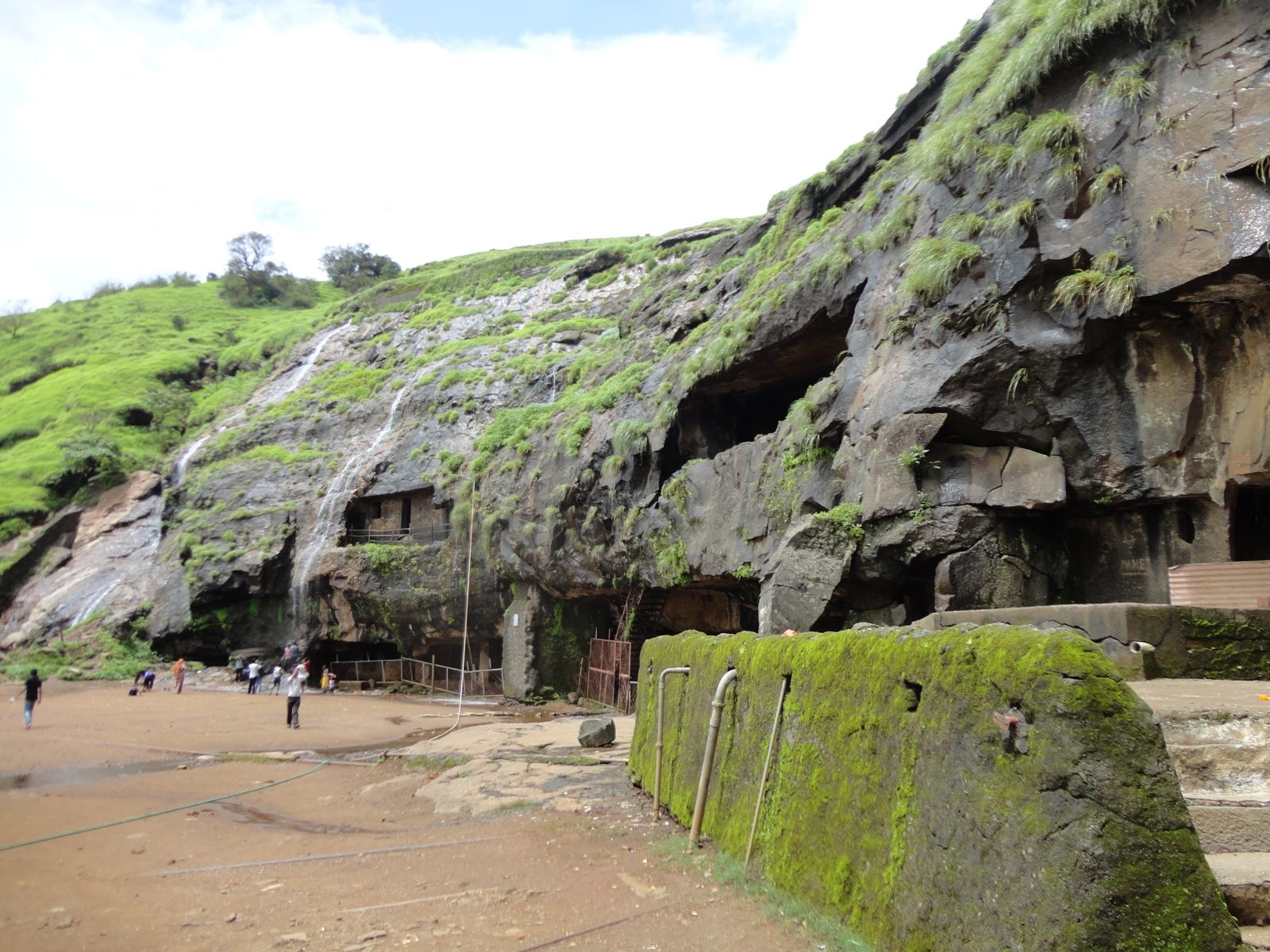
Long before the present shrine drew pilgrims up the steps, artisans were cutting halls and cells straight out of the basalt of this hillside. The result is the Karla (also spelled Karli or Karle) group of caves: a planned Buddhist complex carved over centuries, set above the old trade route between the Konkan coast and the Deccan plateau. Today the caves are a centrally protected ASI monument, cared for as a piece of national heritage.
It is worth being clear about what the site is. The caves are an archaeological monument with their own recorded history. The Ekvira Devi Temple that shares the hill is a living place of worship with its own devotional tradition. The two are neighbours, not the same thing — a point we return to below.
What you will find here
The complex contains roughly sixteen caves of different kinds. Some are viharas, the residential and study cells once used by a monastic community; others are smaller shrines. Rising above them all is the celebrated prayer hall, or chaitya. For the detailed architectural account and the longer history of the hill, see Architecture & Caves and the temple's history and legends page; this page is a concise overview and a starting point.
The temple and the caves — how they relate. The Ekvira Devi Temple and the Karla Caves occupy the same hill, which is why visitors so often see them together. But they are historically and administratively distinct: the temple is a living Hindu shrine maintained by its Trust, while the caves are an ancient Buddhist monument managed by the ASI as a protected site. They keep separate timings and ticketing — darshan at the temple is free, while the caves are separately ASI-ticketed. Read about the living shrine on the Temple page, and plan the cave visit on the visitor information page.
Architectural highlights
The carving here is unusually ambitious. The headline features below give a sense of the scale and craft; the full description, with its trade-route and inscription context, lives on the Architecture & Caves page.
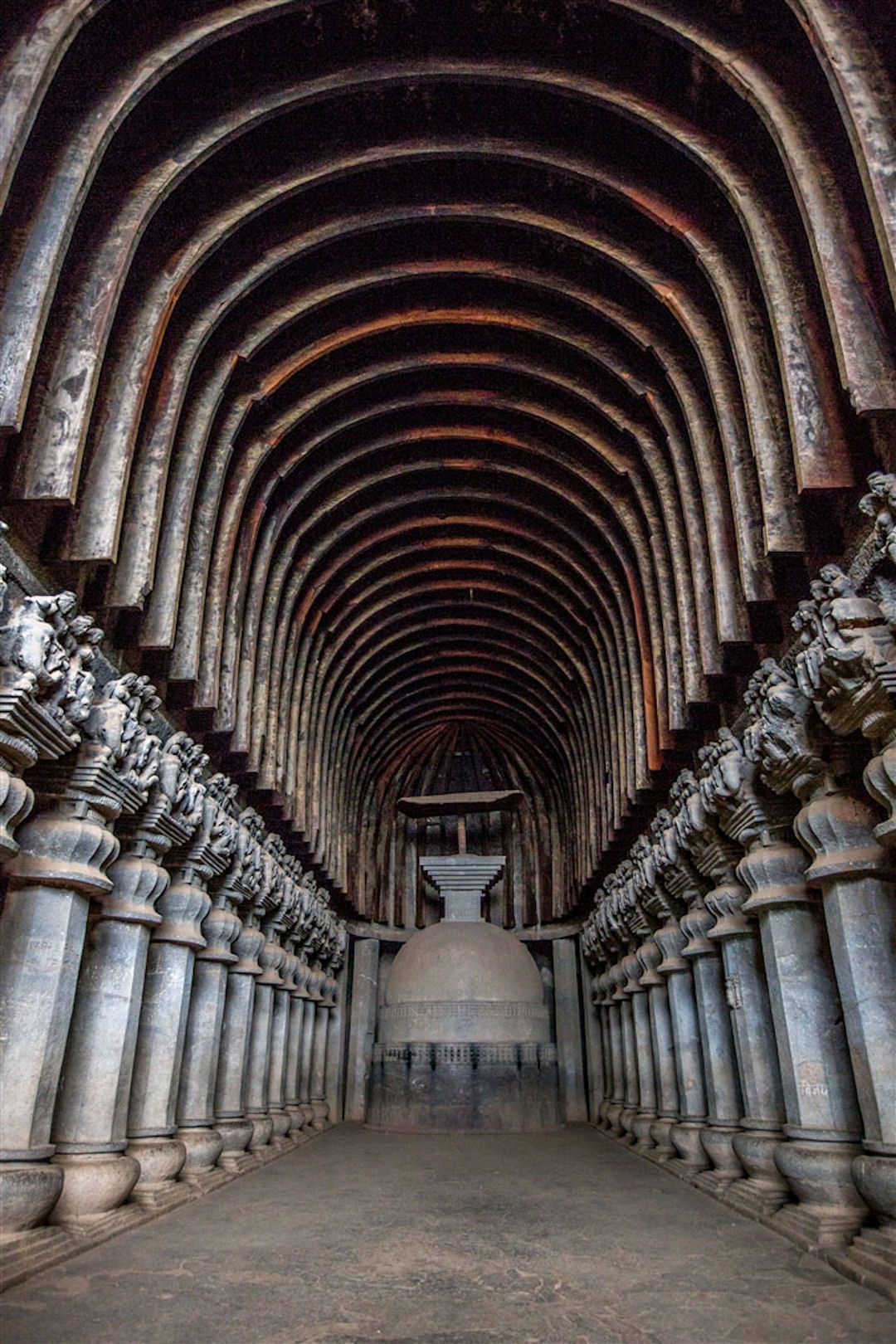
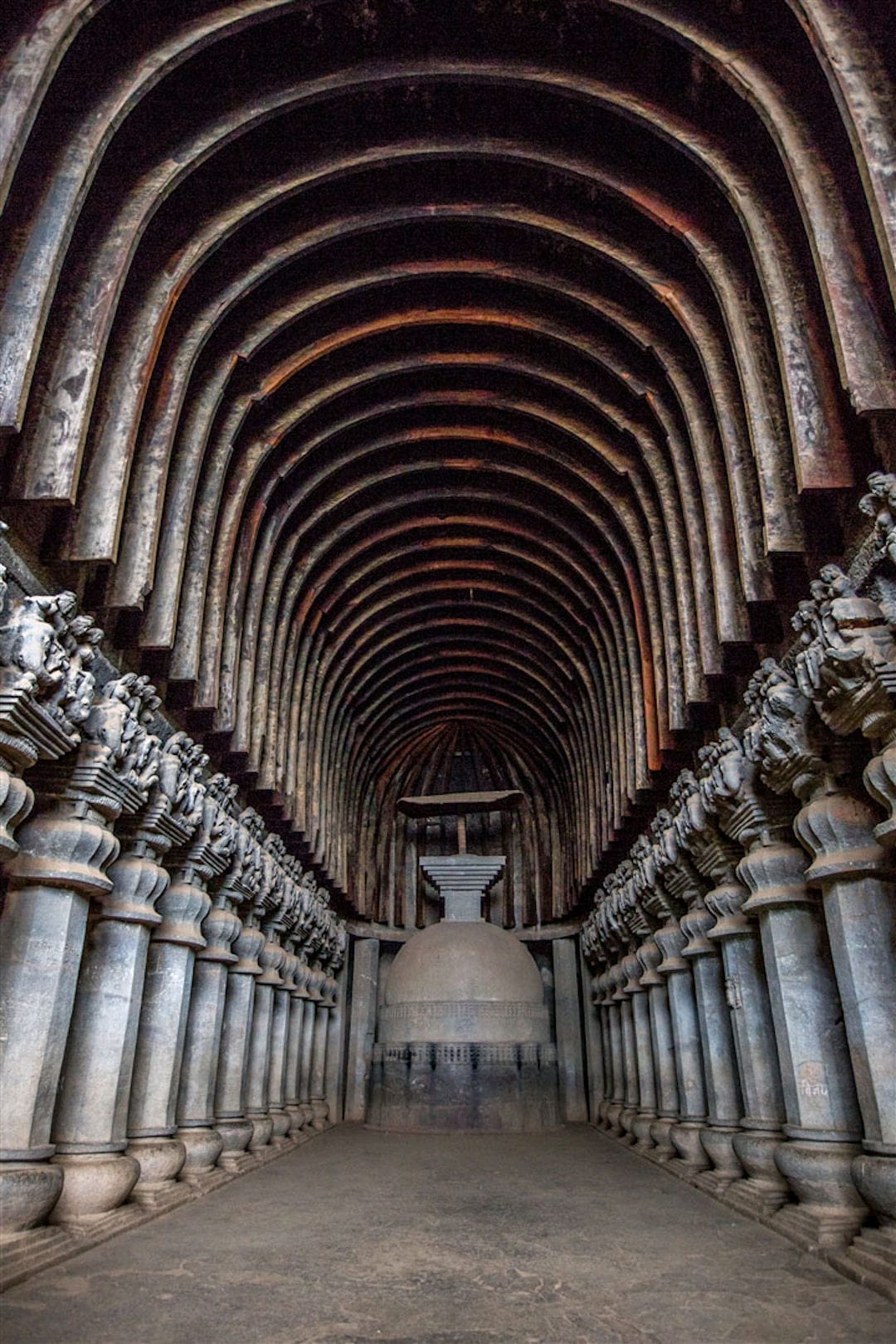
The Great Chaitya
A vast barrel-vaulted prayer hall, counted among the largest rock-cut chaityas in India — the centrepiece of the whole complex.
Octagonal pillars
Around thirty-seven octagonal columns line the hall in two rows, several crowned with carved figures and animals.
Monolithic stupa
A single carved stupa stands at the far end of the chaitya, the focus of the hall and of the prayer that once filled it.
Chaitya-window facade
The great horseshoe-shaped (chaitya) window over the entrance once drew daylight deep into the hall across its sculpted screen.
Lion pillar
A free-standing column near the entrance carries lions at its crown — one of the best-known features of the site.
Viharas
Cells and halls cut for a resident monastic community, ranged around the main chaitya across the complex.
Planning a visit
The caves keep their own hours and ticketing, which are different from the temple's. If you intend to see them as well as the shrine, it helps to plan around the cave timings, because they close earlier in the day. Everything you need — reported ASI hours, ticketing notes, and conservation and photography rules — is gathered separately so it is not confused with temple darshan information.
Karla Caves — Visitor Information
Reported ASI hours, ticketing, and conservation and photography rules for the caves, kept separate from temple timings.